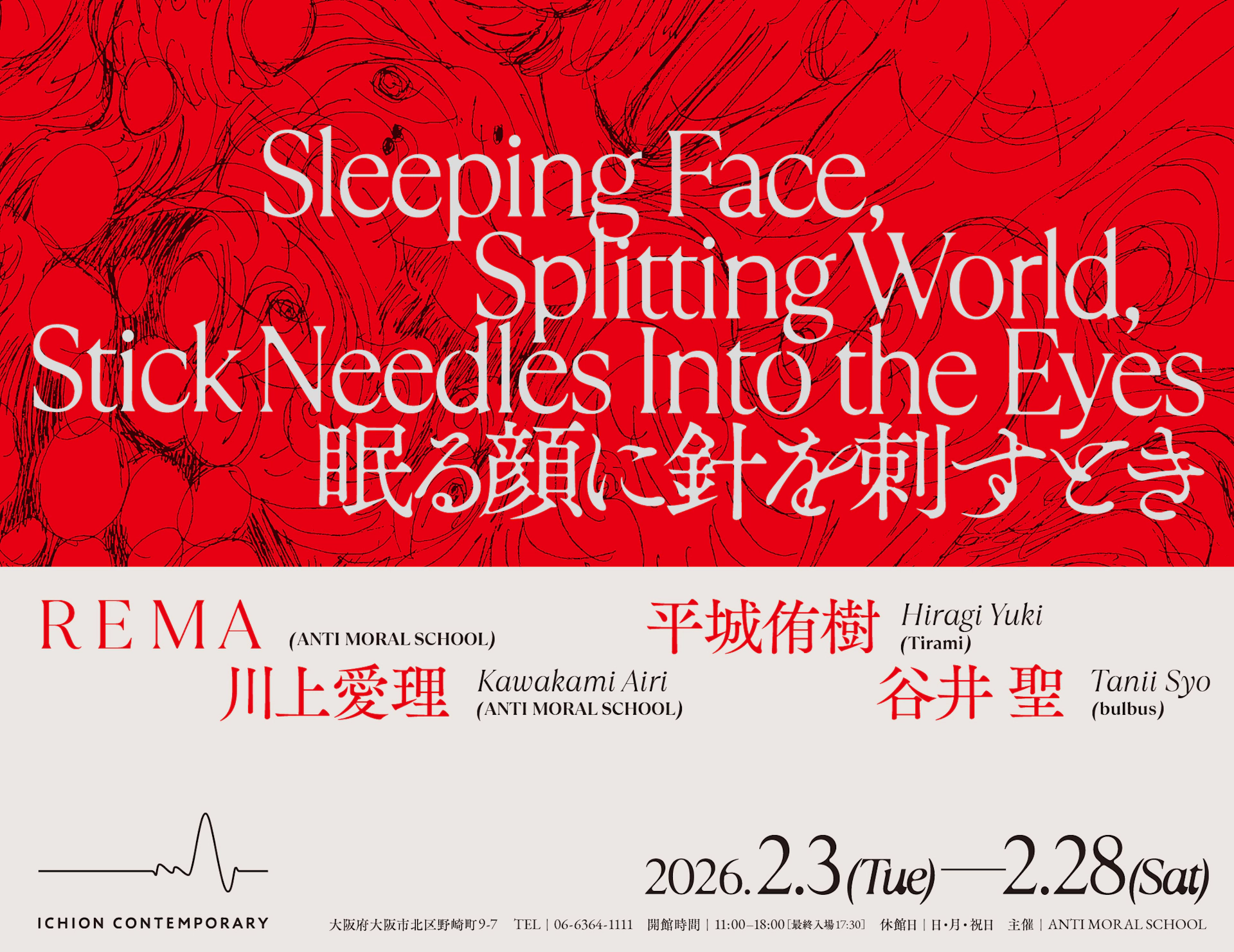
This exhibition begins with a question: in an age where information and images are violently saturated, can we truly say that we are seeing what is in front of us? As scenes of tragedy and humor appear side by side on the same screen, and events are instantly shared, consumed, and forgotten, from where can sensation and ethics possibly arise? This urgency takes different forms within the practices of the four artists gathered here. Through the pastiche of works by Ana Mendieta, R E M A exposes how ethics can easily waver and be transformed by environment and circumstance. Airi Kawakami, drawing from her own experience of surgery, moves back and forth between “hospital” and “hospitality,” translating bodily memory and gaze into painting. Meanwhile, the chairs by Yuki Hiragi and the generative interventions of plants by SYO TANii bring breath and circulation into the exhibition space, giving rise to new cycles in the relationship between artworks and viewers. Mediated through different materials and bodies, the expressions of these four artists intersect within the space and gradually emerge as a single dialogue. This exhibition is an attempt to return the ethics and sensations that lie between seeing and feeling to our own bodies.

A sleeping face, and a world being torn apart. The exhibition title, Sleeping Face, Splitting World, Stick Needles Into the Eyes, appears as a poem that encompasses seeing—or awakening—and the will to recover an ethics that has been shattered. As we spoke about the theme of the exhibition, a question arose within us in this contemporary moment of violent saturation of information and images: can we really say that we are “seeing” what is visible before our eyes? At dawn, unable to sleep, I was absentmindedly scrolling through short videos when one image suddenly caught my attention. In the pale gray rubble faintly lit by the morning sun stood a boy who looked about ten years old, holding a large mass of vivid red and white flesh in his arms. The translated caption stated that the boy was holding his mother. Instinctively, I looked at my own mother sleeping beside me, and for reasons I could not explain, tears began to flow uncontrollably. In that moment, I felt—clearly enough to say for the first time—that I had truly seen that fact. A sleeping face, and a world being torn apart. The everyday life that exists here and now, and an unbearable reality. Confronted with this pressing truth, how long can we continue to keep our eyes open? The image at the opening of Ryu Murakami’s novel Piercing—a man possessed by the obsessive fear that he might stab his sleeping baby with an ice pick, standing drenched in cold sweat while gripping a sharp needle—symbolizes an ethics that resides in the choice not to pierce. The moment to stick a needle into the eye is now.

Open:

11:00‒18:00 (Last entry at 17:30)

Closed:

Sundays, Mondays, and Public Holidays

Admission:

Free

Artists:

R E M A, 川上愛理(Airi Kawakami), 平城侑樹(Yuki Hiragi), SYO TANii

Group Visits (10+ guests)
Advance reservations via phone or email are required for groups of 10 or more.Without a reservation, admission will be declined.To ensure safety and smooth operations, please divide into groups of under 10. Waiting groups should remain on the bus and avoid gathering near the building entrance.

Donation Request
For group visits, we kindly ask for a donation of ¥1,000 per guest (middle school age and above). Donations support our exhibitions, artists, and facility maintenance. Donors will receive an original exhibition tote bag as a thank-you gift. (Children under elementary school age are voluntary.)

EXHIBITION CONTENTS

R E M A

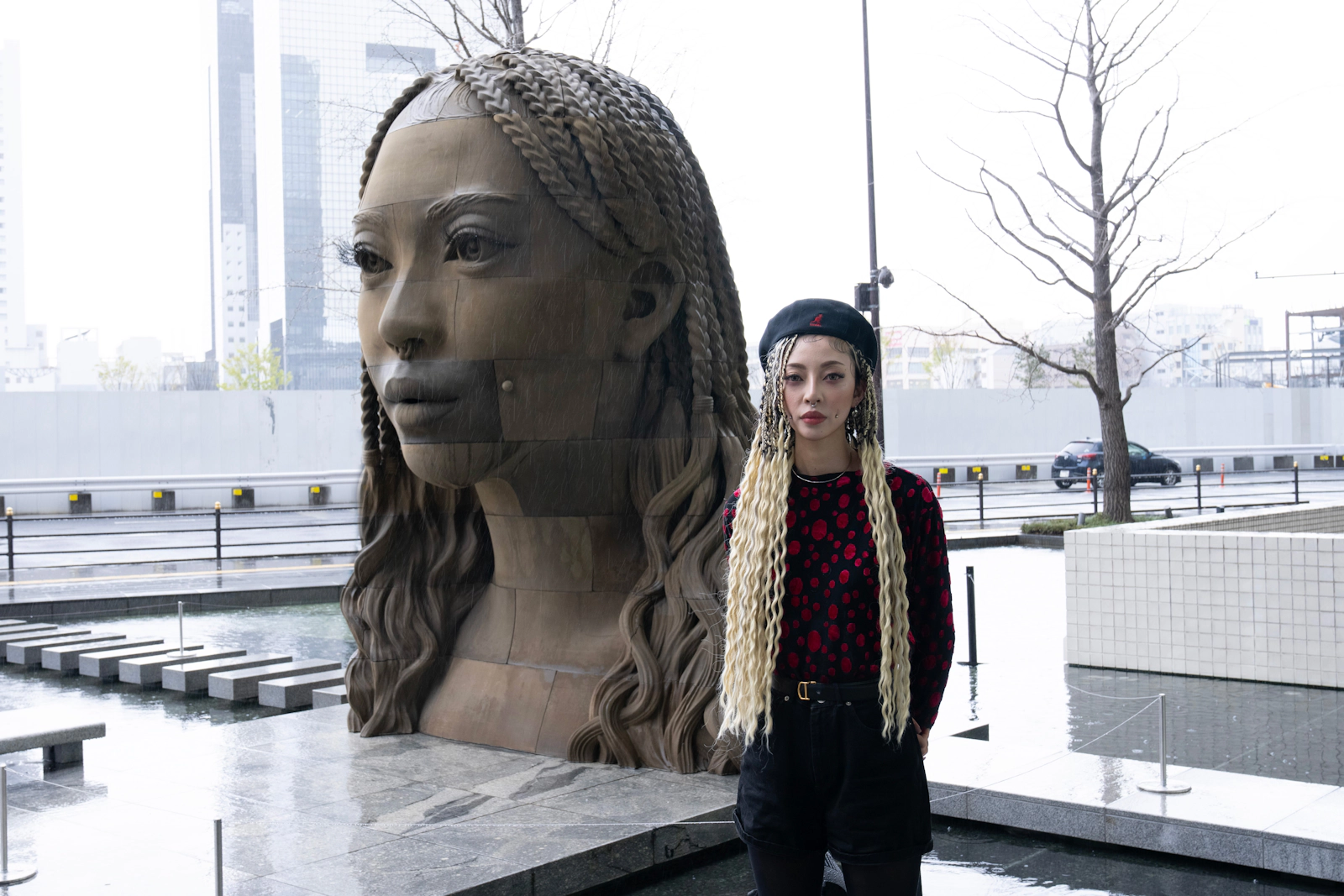
R E M A explores questions surrounding gender and social roles through bodies of work that use the image of the self as a mediating device. In her early practice, she incorporated decorative elements of the body̶such as makeup and costume̶to foreground questions of femininity through the construction of a staged “self-image.” In recent years, these images have shifted toward more abstract forms. Through physical acts such as line-based drawing and burning, traces are inscribed directly into the material itself. The motifs that emerge in this process appear icon-like yet retain a sense of the primal, drawing viewers into a sensory realm that transcends time and language. Her large-scale sculpture The Woman with Terrestrial Malady “LEM” (7 meters in height) was exhibited at Expo 2025 Osaka, Kansai, and is scheduled for permanent installation in Phuket, Thailand. In 2025, R E M A founded ANTI MORAL SCHOOL Inc. In addition to the sale of artworks, products, and printed matter, the company operates spaces that generate encounters with diverse forms of expression through events and pop-up projects. It also provides studio spaces and exhibition opportunities for emerging artists, functioning as a platform that supports ideas and projects while exploring new forms of creation and exchange.

Kawakami Airi

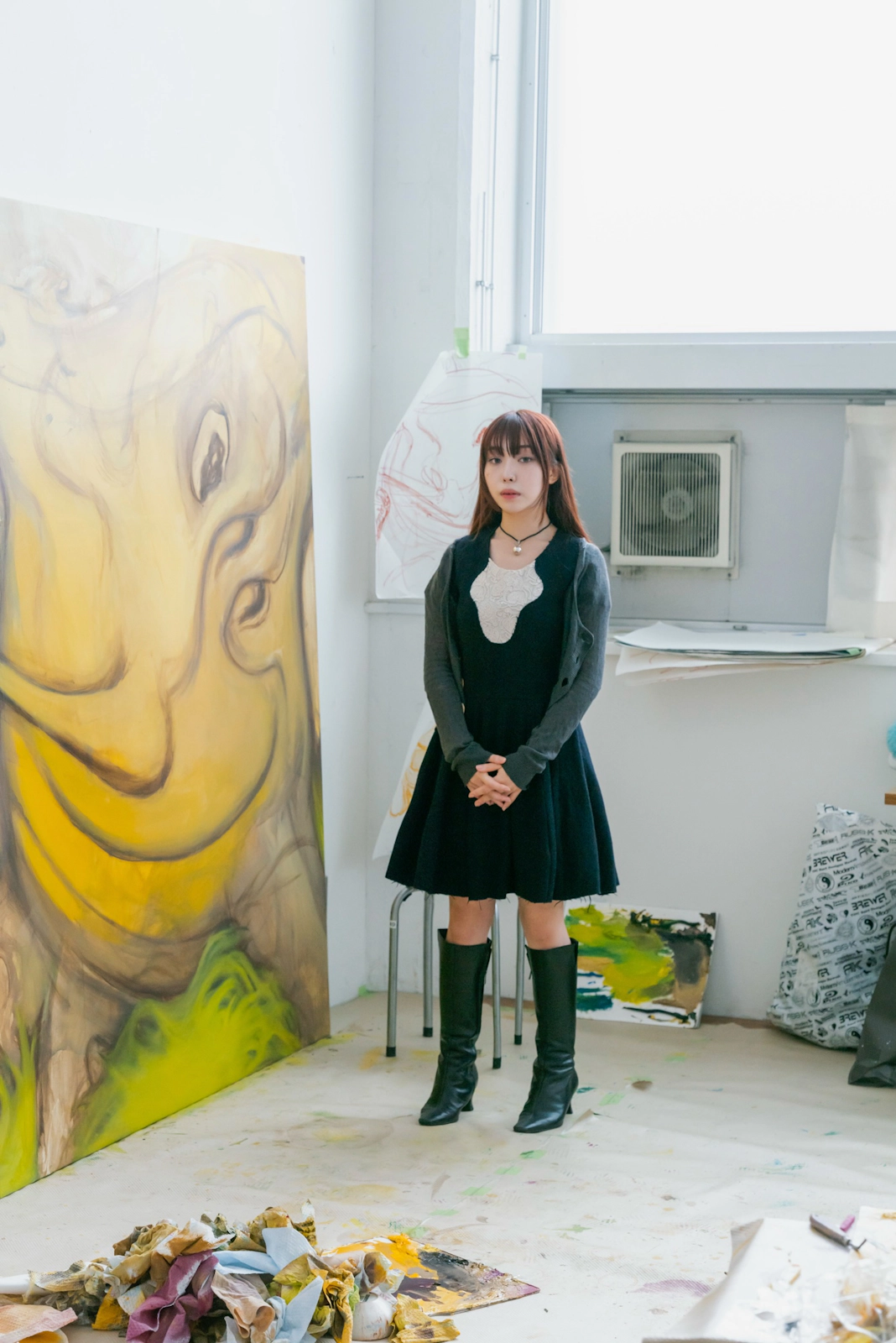
For me, painting is a “window” that both connects and separates this side of the world from the world that exists beyond the canvas. To paint is not to reproduce representations confined within the cage of language, but rather an act of encountering sensations that have yet to be named̶visitors who peer toward this side from the depths of the painted world, or perhaps the world itself. It is a form of bodily labor that takes responsibility for what is “difficult to comprehend,” and at the same time, an attempt to accept that living itself is a wellspring of the unknown. As I listen closely to the images, colors, and presences that gradually emerge, I paint as a servant to the voice of the work, granting poetry to nameless beings that exist beyond the window. To create paintings as their caretaker is the only sacred labor entrusted to me in this world.

Hiragi Yuki

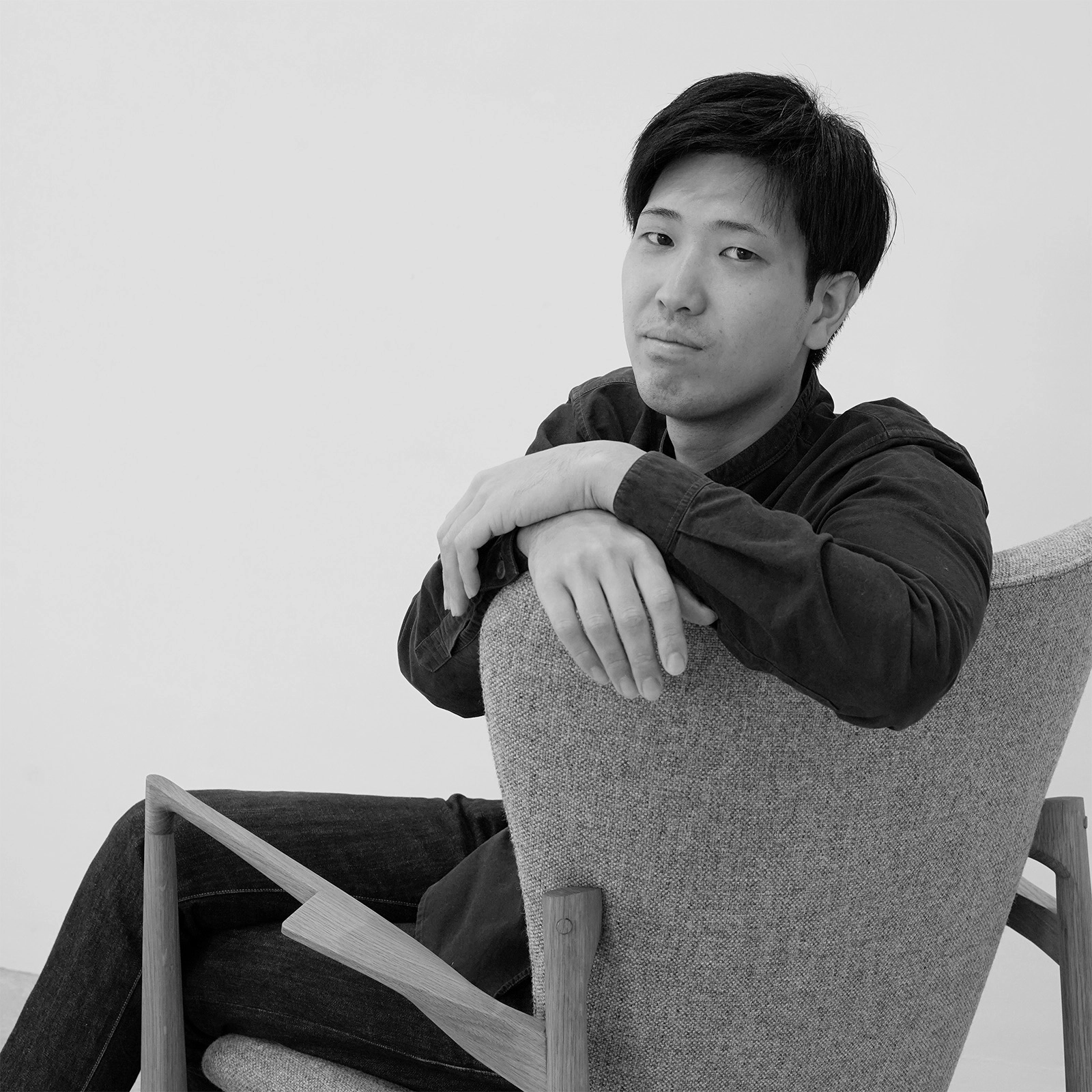
Working with chairs̶the pieces of furniture closest to the human body̶Yuki Hiragi reexamines the structure of the emotion we call “attachment” that people develop toward objects. His forms, which retain traces of handcraft, move back and forth between functionality and symbolism, unsettling the boundary between use and sensation. Through a practice that traverses craft, art, and design, Hiragi seeks to retrieve emotions and memories often overlooked in everyday life, and to reinterpret contemporary relationships between people and objects. At the core of his making is the creation of a “place” where function and sensibility stand in tension yet ultimately achieve harmony. A chair is both the smallest architecture that supports the body and a sculpture that holds emotion. Moving between these two roles, Hiragi discovers beauty in use and restores the tangible reality of living through feeling. By embracing the layered temporality of wood as a material and the traces left by the hand, he attempts to give form to the richness of objects aging alongside those who use them.

SYO TANii

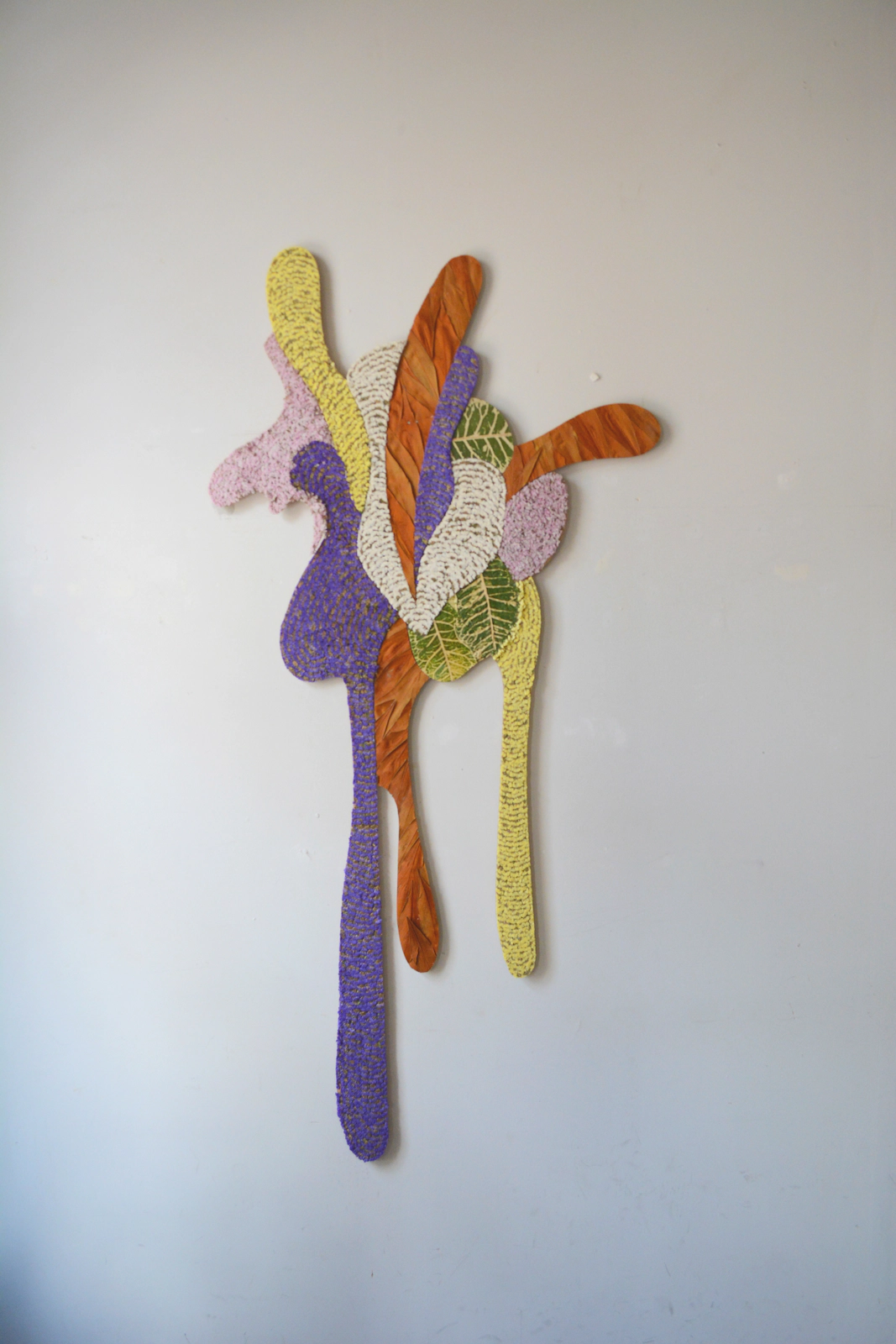
SYO TANii is an artist whose practice centers on plants, encompassing both artwork production and spatial decoration and staging. Working with heterogeneous materials such as plaster, acrylic, and silicone, he employs processes including pressure, fixation, and layering to accentuate the inherent characteristics of plants. Through combinations with non-organic materials, he renders visible qualities often overlooked in everyday life̶such as form, texture, fragility, and the subtle instability of contours̶offering viewers new perspectives from which to perceive plants themselves. Alongside his artistic practice, SYO TANii also undertakes plant-based spatial design for hotels, commercial facilities, and event spaces. By reading the relationships between plants, architecture, lighting, and circulation, he designs environments as integrated wholes, altering the experiences and visual trajectories of those who inhabit them. Rather than treating plants as mere decorative elements, his work emphasizes the process through which the presence of plants mediates transformations in the character and impression of a space. Through both artwork and spatial practice, SYO TANii continues to create opportunities for renewed awareness and curiosity toward plants, prompting a reconsideration of the relationship between humans and the botanical world.