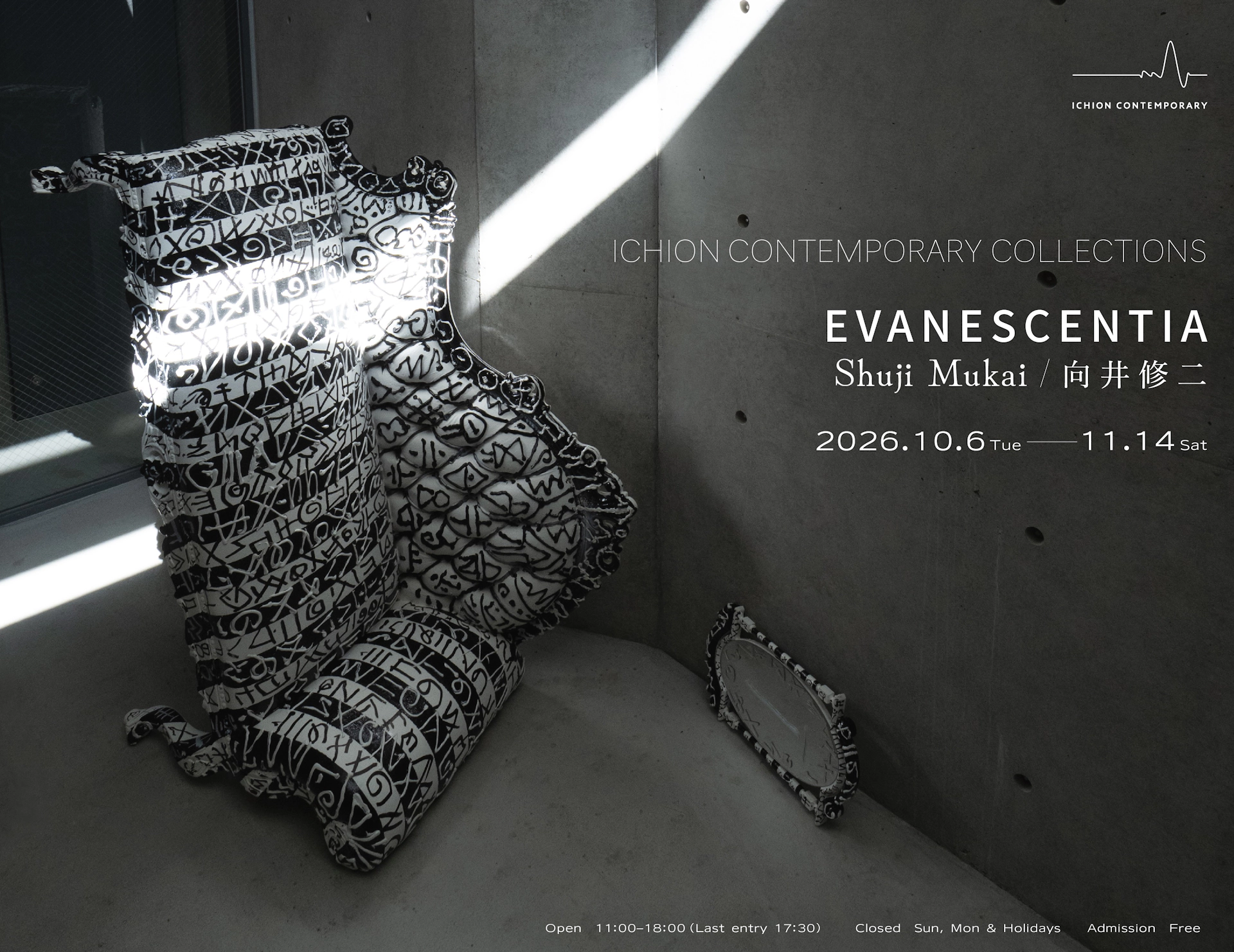
ICHION CONTEMPORARY is pleased to present EVANESCENTIA, an exhibition of works by Shuji Mukai from the gallery’s collection, on view from Tuesday, October 6 through Saturday, November 14, 2026.
In 1959, while a student at the Osaka School of Art, Shuji Mukai met Jiro Yoshihara, leader of the Gutai Art Association, who recognized his talent. In 1961, Mukai joined Gutai as its youngest member; Yoshihara praised his works, saying, “While they appear cool at first glance, there is a furious energy lurking within them.” From early in his career, Mukai developed a distinctive visual language by repeatedly covering the picture plane with symbols without fixed meaning. He later extended this practice to objects, architectural spaces, and even his own body. In 1966, Mukai participated in The New Japanese Painting and Sculpture at The Museum of Modern Art (MoMA), New York. His 1963 work Untitled remains in the museum’s collection today.
Within the Gutai Art Association, experimentation extended beyond conventional painting through direct engagement with materials, the body, action, time, and space. Performance and installation were not simply departures from painting; rather, they became means of rethinking what painting could be and expanding its possibilities. Mukai’s practice was deeply rooted in this broader exploration of painting.
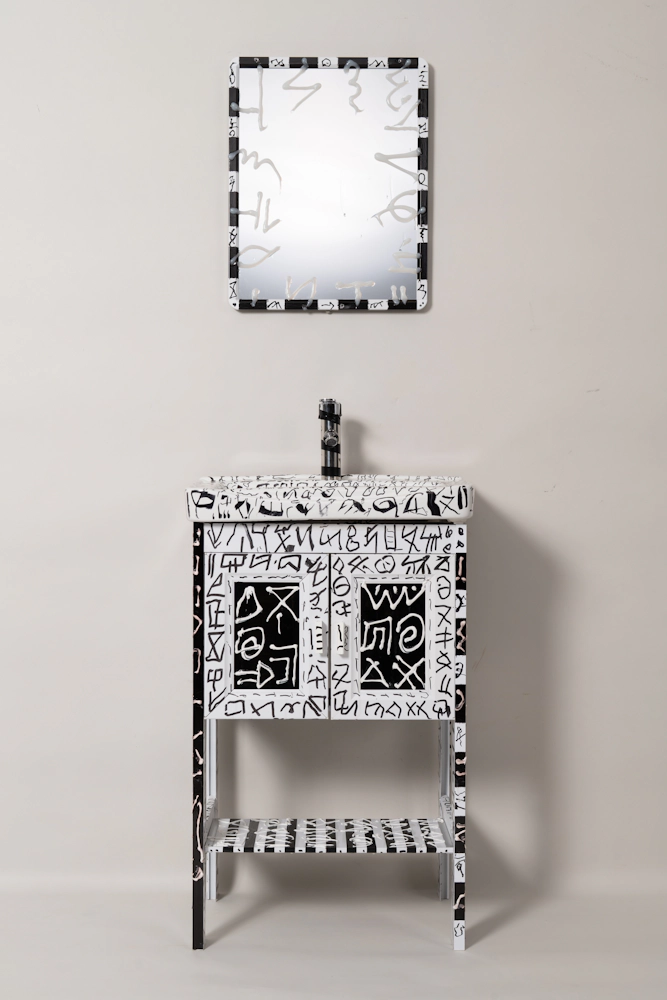
In Symbol Room (1961), presented at the 10th Gutai Art Exhibition, Mukai covered the furnishings of an interior and even his own body with symbols, placing himself within the space. Here, painting expanded beyond the two-dimensional picture plane into physical space, incorporating the human body itself.
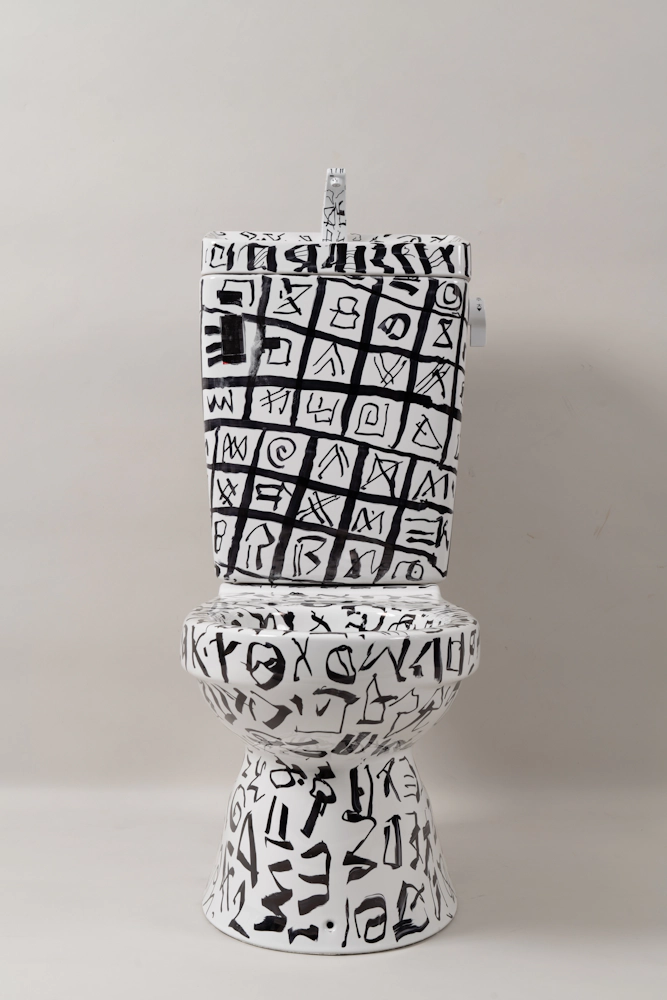
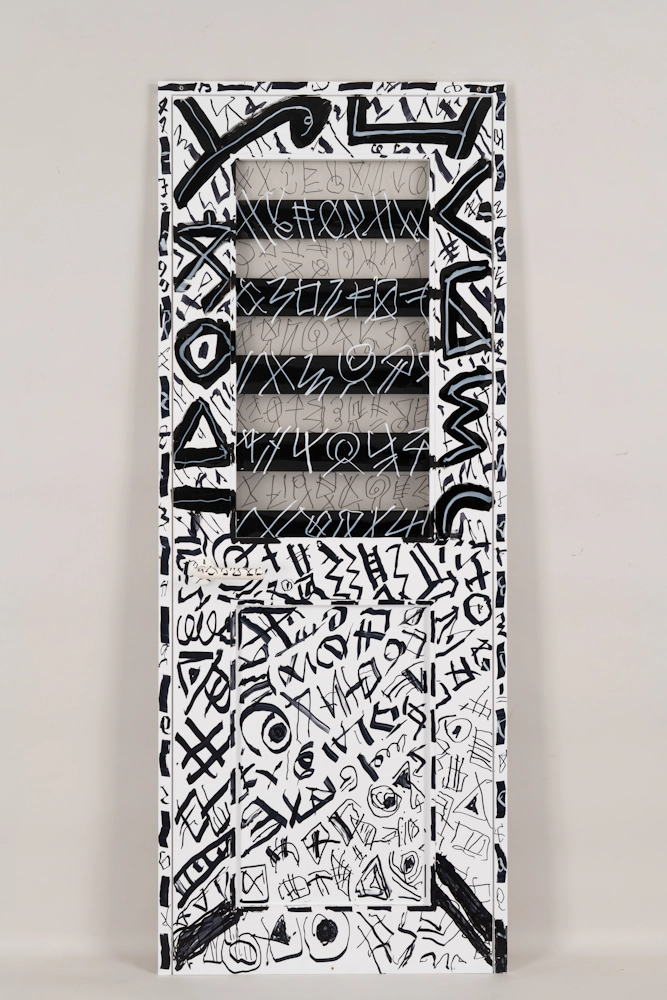
Mukai’s practice also included Happening: Burning All My Works, in which he cast his own works into the flames, transforming painting into an environment. Yet he did not abandon painting; instead, he carried his symbols beyond the picture plane and into the realm of everyday life. In 1966, at the jazz café Check in Umeda, Osaka, he covered the walls, furniture, tableware, and even the people working there with symbols, expanding the work into an environment experienced through music, food and drink, and social interaction. Such interventions into physical space have continued to the present, with projects at the Solomon R. Guggenheim Museum in 2013, the Hyogo Prefectural Museum of Art in 2014, Louis Vuitton SoHo in New York in 2017, and the Nakanoshima Museum of Art, Osaka, in 2022.
Mukai’s symbols are not intended to point to fixed meanings. Through the physical act of repeating them countless times, he renders conventional processes of signification and classification inoperative, dissolving established distinctions and boundaries. When his symbols cover objects and spaces, the established systems of naming, use, and value that once defined them are dismantled, confronting the viewer with the question: “What is this?” The exhibition title EVANESCENTIA, meaning “disappearance,” reflects this perspective: through Mukai’s symbols, the meanings and values previously assigned to things fall away, opening onto new forms of perception.
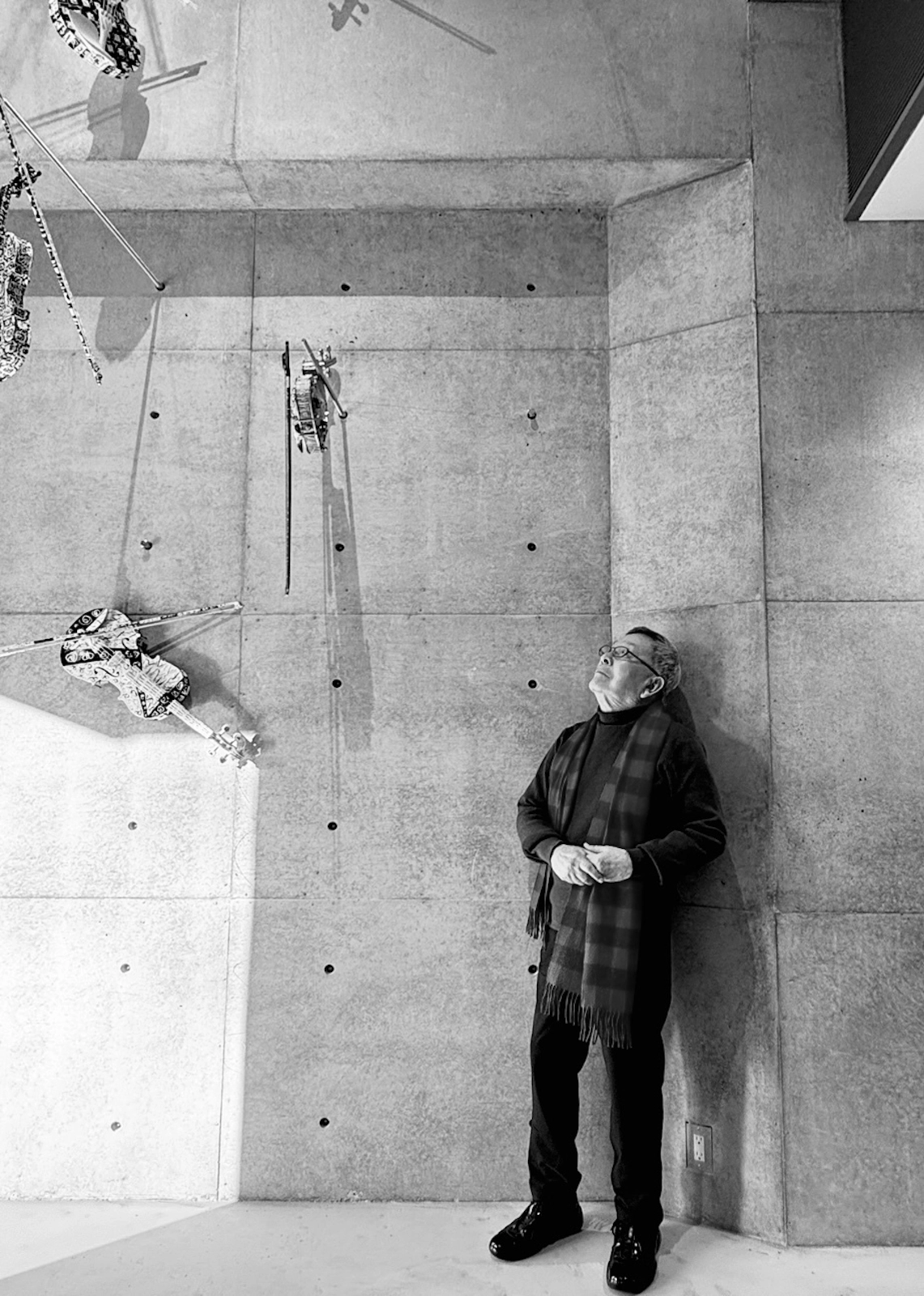
For EVANESCENTIA, works from the gallery’s collection—including objects severed from their established meanings and functions through Mukai’s symbols—are presented within ICHION CONTEMPORARY’s Tadao Ando-designed architecture. Within the gallery space, the exhibition also seeks to deconstruct the order of the “room” as a familiar structure of everyday life. Here, the works do not exist by themselves; they take on new meanings through their relationships with the architecture and viewers.
Rooted in the lineage of postwar Japanese avant-garde art, Mukai’s symbol-based practice continues to expand in response to changing times, architectures, and social spaces. EVANESCENTIA invites viewers to enter a space in which established meanings have disappeared and to encounter the essence of Mukai’s practice through new modes of perception that emerge from their own experience of the exhibition.
- Open:
11:00‒18:00 (Last entry at 17:30)
- Closed:
Sundays, Mondays, and Public Holidays
- Admission:
Free
- Artists:
Shuji Mukai
Group Reservations
Groups of 10 or more visitors are required to make a reservation in advance by phone or email. Please note that we may not be able to admit groups without a prior reservation. To support our exhibitions, artists, and the maintenance of the gallery, we kindly ask for a ¥3,000 donation per person for group visits (applicable to junior high school students and above; optional for elementary school children and younger). As a token of our appreciation, each donor will receive an original ICHION CONTEMPORARY tote bag.
Visitors with Young Children
To help ensure the safety of our visitors and the protection of the artworks, visitors accompanied by preschool-aged children are required to make a reservation in advance. A member of our staff will accompany you during your visit. We kindly ask that you make a reservation before your arrival. Same-day visits may be accommodated; however, admission is subject to staff availability. Thank you for your understanding.
EXHIBITION CONTENTS
Shuji Mukai
Major Collections:
MoMA; Guggenheim Museum; National Museum of Art, Osaka; Hyogo Prefectural Museum of Art.